
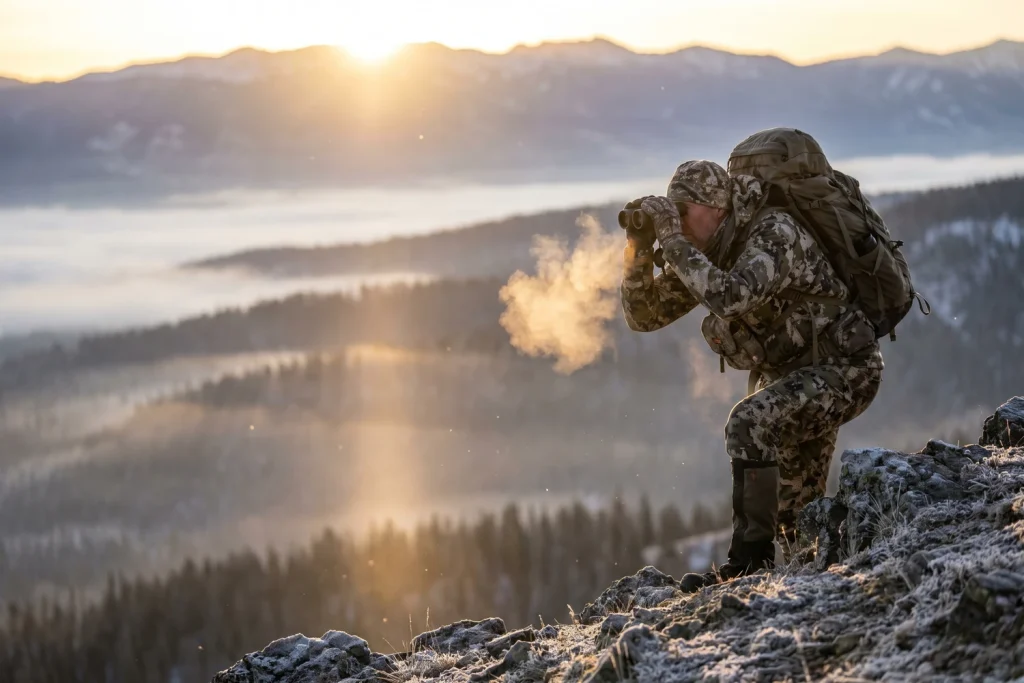
The basin gave us nothing for three days. We glassed it cold every morning before the light was honest, walked the timber edges in the afternoon, and slept on the same patch of frost-bent grass three nights running. No tracks worth the name. No bugles. A coyote, once, working the far slope like he owned it. That kind of quiet wears on a person who measures a hunt by movement.
But country like this does not owe you a steady drip of sign. The Bitterroot high country holds its animals the way it holds its snow — in folds you cannot see from where you are standing. Elk shift on weather, on pressure, on a wind you felt two ridges over. Three empty days is not the basin telling you it is barren. It is the basin telling you to keep your seat and your eyes open.
On the fourth morning it all arrived at once. A herd poured off the north shoulder before sunup, a satellite bull working the edges, and the wind held just long enough. The shot itself was the smallest part of it. What mattered was that we had stayed put long enough to be there when the country finally decided to show its hand.
We tell every hunter who books a backcountry elk trip with Blackwater Ridge the same thing: the basin will test your patience before it rewards it. Bring the patience. The reward takes care of itself.