
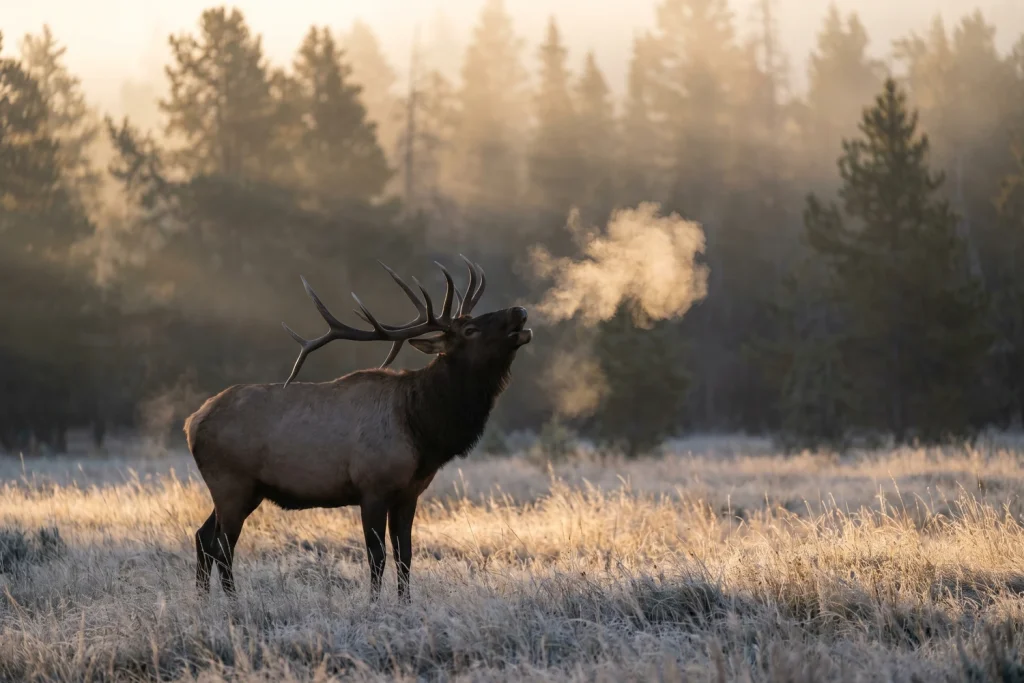
The mistake nearly everyone makes at altitude is glassing like they are looking for something obvious. They sweep the slope fast, find nothing, and move. But an elk bedded in shadow does not look like an elk. It looks like a stump, a shadow, a patch of darker brush — until it flicks an ear, and then it looks like the most obvious thing on the mountain and you wonder how you missed it for forty minutes.
Get off your feet. A tripod is not a luxury at twelve power and above; it is the difference between seeing and guessing. Break the slope into a grid and work it like you are reading a page, left to right, top to bottom, slow enough that it feels like you are wasting time. You are not. The first pass finds the obvious. The third pass finds the animal that has been there the whole time.
Light is your other tool. The first forty minutes of the day and the last forty are when animals move and when low sun rakes across the country and turns a tan hide into a beacon. Glass into the shadows in the morning, into the light in the evening. And when you find one, do not rush to it. Watch it. Learn where it is going before you commit a single step.
We have guides at Blackwater Ridge who can pick a bull out of a black-timber pocket two miles off, and to a person they will tell you it is not the glass — it is the patience. Borrow ours until you build your own.