
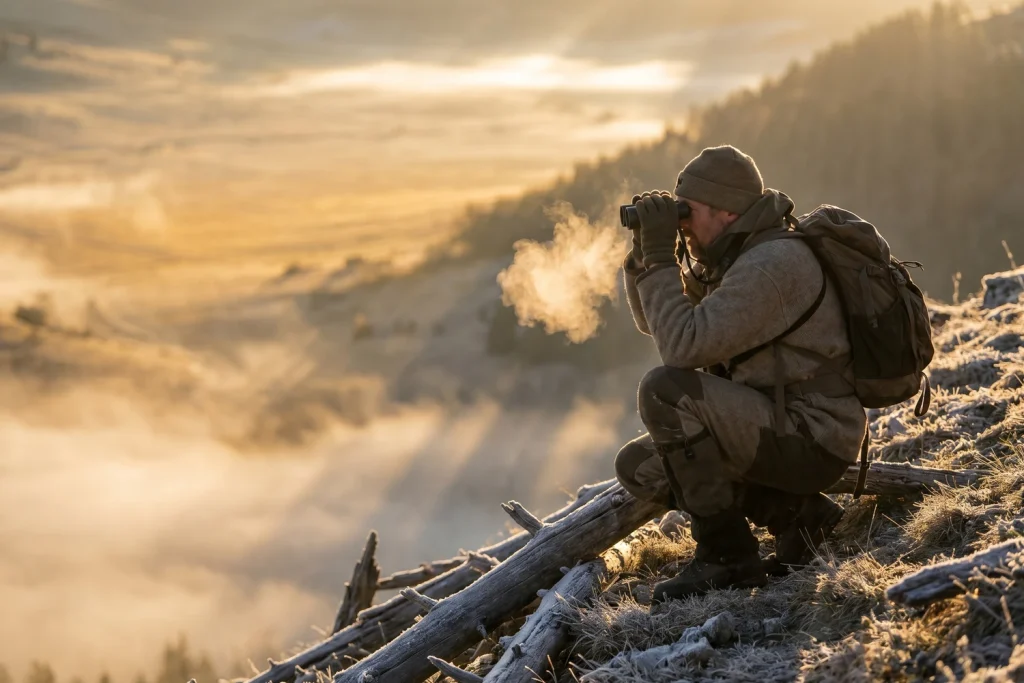
Cold air sinks. Through the night, the chilled air on the high slopes slides downhill, and your scent rides it down into the drainages below you. That is the morning thermal, and for the first hour of light it is dependable — wind in your face as you climb, scent pouring away behind you down the valley. Hunters learn this and trust it. Then the sun clears the ridge and the lie begins.
As the slopes warm, the flow reverses. The downhill draft stalls, swirls, and then begins to climb, carrying your scent up the mountain ahead of you — straight into the bedded animals you spent the dark hours climbing toward. The switch does not announce itself. It happens in a window of maybe twenty minutes, and it is when more careful stalks fall apart than at any other point in the day.
The fix is not complicated, but it asks for discipline. Carry a wind checker and use it constantly, not once. Plan your approach so the thermal switch finds you above and downwind of where you expect the animal, not below it. And when you feel that first warm push of air against the back of your neck, understand the country has just changed the rules on you, and adjust before it costs you the morning.
The thermals in these drainages have been teaching the same lesson for four generations, and at Blackwater Ridge it is the first thing our guides drill into a new hunter. Respect the switch. Hunt the wind, not the map.