
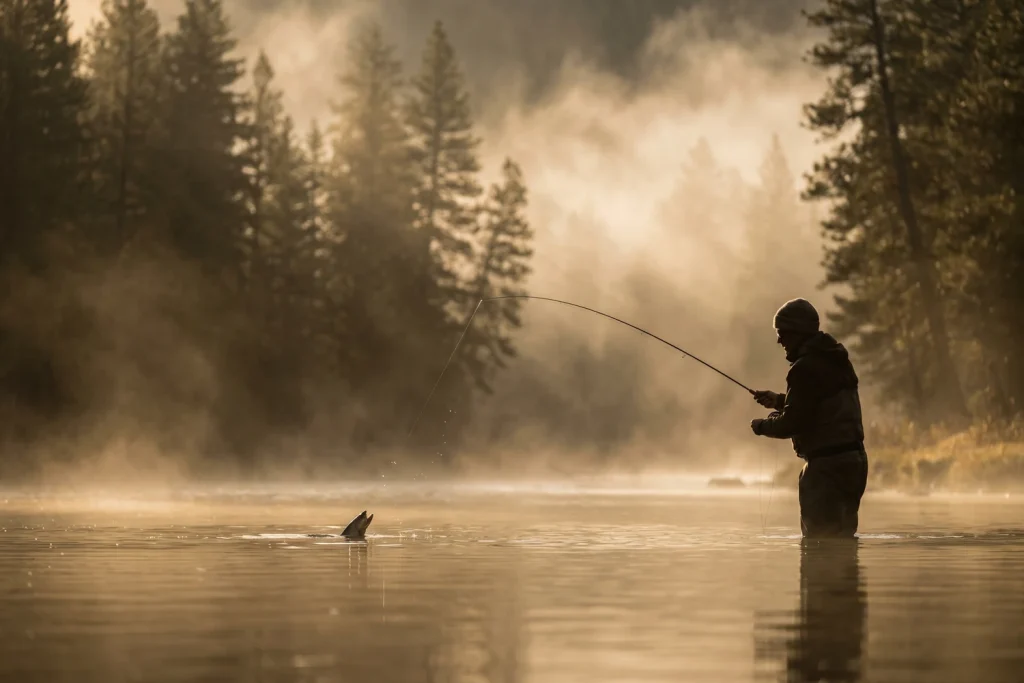
A trout lives its whole life solving one equation: maximum food for minimum effort at acceptable risk. Once you understand that, the river stops looking like undifferentiated current and starts looking like a map of where fish have to be. They want a seam where fast water delivers food alongside slow water where they can hold without burning energy. They want a roof — a boulder, a cut bank, a riffled surface — between them and the eagles. Find those two things together and you have found a fish.
Riffles oxygenate and tumble food; the heads and tails of pools are conveyor belts. The slick water behind a midstream boulder is a trout’s easy chair, food sweeping by on both sides while the rock breaks the current. Foam lines are not litter — they are exactly where the surface current concentrates, and where the bugs concentrate, the fish concentrate. When in doubt, fish the foam.
The hardest skill is learning to ignore the pretty water. That deep, glassy, photogenic pool often holds fewer feeding fish than the broken, awkward pocket water nobody wants to fish because it is hard to cast to. Trout do not care about your casting. They care about the seam. Fish the awkward water.
We could hand a client the perfect fly and the perfect cast and it would not matter if they put it in dead water. Most of what a guide at Blackwater Ridge is actually teaching, float after float, is how to look at a river and see the fish before you ever make the cast.