
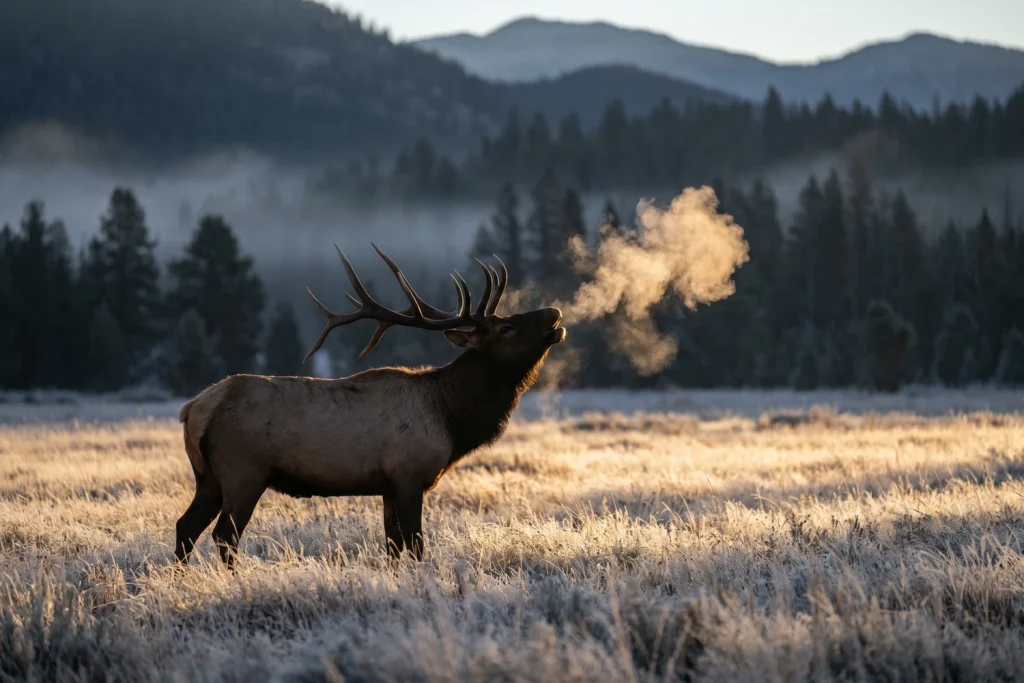
September does not arrive on a single day. The rut builds through it like weather coming over a ridge — you can feel the pressure change before you hear the first bugle. Early in the month the bulls are still loose, still bachelored up, testing their voices against the cold mornings. Call too aggressively now and you push them. This is the stretch to locate, to listen, to learn which drainages hold the talkers.
By the second week the herd bulls have gathered their cows, and the country gets honest. A bull guarding twenty cows is not lonely and is not coming to a love-struck cow call. He is coming to a challenge, if he comes at all. We shift to raking timber, to bull-to-bull aggression, to making him believe a rival is about to steal what is his. It does not always work. When it does, it is the loudest, closest, most heart-in-the-throat hunting there is.
The last week is the satellites’ week. The young bulls run the edges of the herds, frustrated and reckless, and a hunter willing to slip in tight and play to that frustration can have the morning of his life. Wind is everything now. You will get one approach, maybe two, before the herd relocates a mile up the basin.
Four generations of guiding the Bitterroot has taught us that the calendar matters less than the conditions. A cold front in mid-September can compress the whole rut into seventy-two screaming hours. We watch the weather as closely as the elk do, and at Blackwater Ridge we time the hard hunts to land on those windows.