
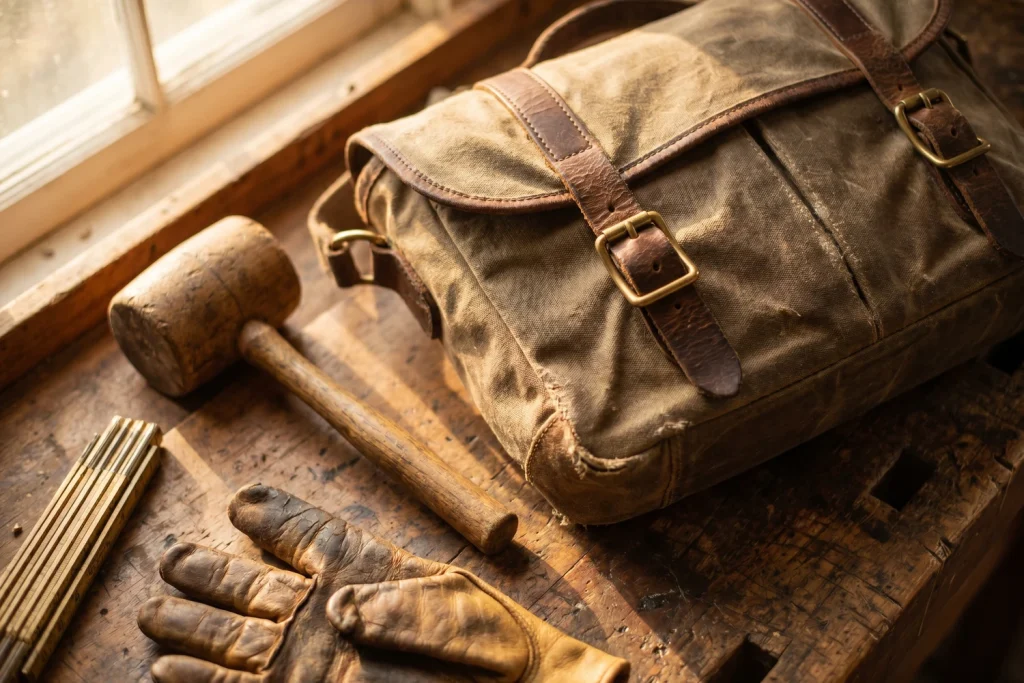
Show a piece of our gear to an engineer optimizing for cost and they will tell you it is over-built. The seams are stronger than the load requires. The leather is thicker than the spec. The hardware is rated for more than it will ever carry. They are not wrong about the numbers. They are wrong about the country. We do not build for the load on the brochure. We build for the load on the worst day of the trip.
The backcountry does not test gear at the average. It tests it at the extreme — the fully loaded pack dropped on a rock, the strap that takes the whole weight of a quartered elk, the buckle that freezes and then gets yanked, the canvas that has to turn a storm it was never going to see in a showroom. A thing built precisely for normal use fails exactly when you need it most, which is to say at the moment that is not normal. So we build for that moment instead.
Over-building has a cost in weight and in money, and we make those trade-offs deliberately, not blindly. We will shave weight where shaving it does no harm. We will not shave it off the point where the gear takes its hardest load, because that is false economy paid for at the worst possible time, miles from anywhere, with no way to fix it. The few extra ounces at the stress point are the cheapest insurance you will ever carry.
When something from Blackwater Ridge feels heavier in the hand than you expected, that is not waste. That is the part of the design that has read the country and decided to come back stronger than it strictly had to. The mountain does not grade on a curve.